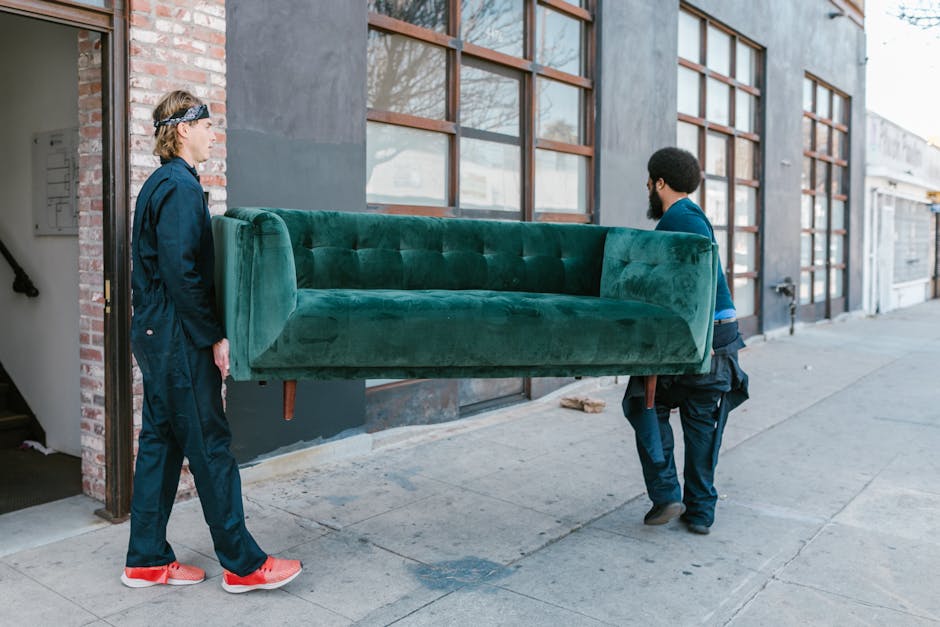
How to Move a Bulky Sofa Down Narrow Woodlands Lanes
Posted on 07/05/2026
Moving a bulky sofa sounds simple enough until you meet a tight lane, a sharp bend, low-hanging branches, or a front door that opens the wrong way. If you're figuring out how to move a bulky sofa down narrow Woodlands lanes, you're probably dealing with the kind of access problem that turns a standard move into a proper puzzle. Truth be told, the sofa is often the easy part; the real challenge is the route.
This guide walks you through the practical side of getting a large sofa out safely, without damaging the furniture, the property, or your back. You'll find step-by-step advice, useful tools, common mistakes, and the kind of real-world judgement that helps in awkward spaces. If your move also involves other furniture, you may want to look at man and van services in Woodlands or a broader house removals service in Woodlands to make the day a lot less stressful.
Whether you're shifting a sofa from a cottage, a terraced house, a holiday let, or a property with a tight driveway and a narrow lane outside, the same principles apply: measure first, protect everything, move slowly, and don't assume it will "just fit". That assumption causes more trouble than most people expect.
Why How to Move a Bulky Sofa Down Narrow Woodlands Lanes Matters
Narrow lanes create a very specific kind of moving headache. They can limit van access, reduce turning space, and leave you with nowhere to stage the sofa safely before lifting. In Woodlands, that might mean a long carry from the van, a tight entrance gate, or a road edge that makes parking awkward for even a small removal vehicle. A bulky sofa then becomes more than a furniture item. It becomes a spatial problem.
Why does that matter so much? Because sofas are awkward in almost every direction. They're heavy, wide, often soft in the middle but rigid at the frame, and easy to snag on door handles, plaster corners, railings, or uneven paving. On a narrow lane, there's little room to recover from a misjudged turn. One small slip and you can end up with scuffed walls, torn upholstery, or a strained shoulder. Not ideal, to put it mildly.
There's also the timing issue. In a lane with passing traffic, cyclists, dog walkers, or neighbours trying to get past, you may only have a narrow window to manoeuvre. A quick, organised plan helps you avoid blocking access and keeps the whole move calmer. That's especially true if the sofa needs to come out at an odd angle, say first thing in the morning when the light is poor and you can't quite see that one awkward step at the end of the path.
For many people, this is the point where calling in experienced help makes more sense than improvising. If the property has multiple items to move, or the sofa is especially large, a furniture collection service in Woodlands can save time and reduce risk.
How How to Move a Bulky Sofa Down Narrow Woodlands Lanes Works
The basic method is straightforward: assess the route, protect the sofa and the property, choose the right carrying technique, and move in small controlled stages. The real skill is in the detail. Narrow-lane moving is less about brute force and more about angle, balance, and communication. In other words, the sofa does not care how strong you are if it cannot physically turn the corner.
Most bulky sofas move best when you:
- measure the sofa and every pinch point along the route
- clear obstacles before the lift starts
- remove loose parts such as cushions, feet, or detachable arms if possible
- wrap delicate surfaces to prevent tears and dirt marks
- use two or more people with clear lifting roles
- tilt, pivot, and rotate instead of trying to push in a straight line
The sofa may need to travel vertically for part of the route. That sounds odd until you see it in practice. A long three-seater often gets through a narrow doorway by standing it on end, then turning it in a sort of slow, careful twist. If you've never done it before, it can feel counterintuitive. Still, it's very often the only sensible way.
There's no shame in pausing halfway through a lift to reset the angle. In fact, that's usually the smart move. The mistake people make is assuming every movement needs to be continuous. It doesn't. Controlled pauses are your friend.
Key Benefits and Practical Advantages
Planning the move properly gives you more than just peace of mind. It also protects value, reduces delays, and makes the whole day feel more manageable. A sofa that arrives without scrapes, loose stitching, or bent legs is easier to place, easier to sell later, and easier to live with from day one.
Here are the main advantages:
- Less damage risk: careful routing reduces knocks to walls, doors, banisters, and the sofa frame.
- Better safety: fewer rushed lifts means less chance of back strain, finger pinches, or trips on uneven ground.
- More efficient access: if the lane is tight, planning prevents repeated failed attempts at turning or carrying.
- Lower stress: a clear plan helps everyone on the team stay calm. That matters more than people think.
- Better outcomes for awkward properties: cottages, basement flats, and homes with small entrances often need the same careful thinking.
There is also a small but real psychological benefit. Once you've mapped the route and prepared the sofa, the job feels less like a gamble. That makes a difference when you're standing in a narrow lane with only a few inches of clearance on either side and a neighbour's hedge brushing your sleeve. Lovely setting, difficult logistics.
Who This Is For and When It Makes Sense
This guide is for anyone dealing with restricted access and a sofa that does not want to cooperate. Homeowners, tenants, landlords, letting agents, and small business owners all run into this problem. It is especially useful if your property sits on a lane, a shared access road, or a road with limited parking nearby.
It makes particular sense in these situations:
- you're moving from or into a home with a narrow front path or gate
- the sofa is oversized, sectional, or especially heavy
- stairs, corners, or low ceilings add extra complications
- the lane outside only allows short stopping times
- you're moving on your own and need a realistic plan
- you want to avoid damaging freshly painted walls or new flooring
If the move is part of a larger relocation, it's usually worth considering a more complete service rather than treating the sofa as a separate problem. For example, if you also need a careful packing service in Woodlands or help with an office removals job in Woodlands, coordinating everything together tends to be simpler than booking piecemeal. Less back-and-forth, fewer surprises.
One thing I'd say plainly: if the sofa is sentimental, expensive, or difficult to replace, don't treat the move as a casual DIY lift. That's where people get caught out.
Step-by-Step Guidance
Below is the practical sequence that works best in real homes. Not glamorous, but solid. And solid is what you need when the alley is tight and the sofa is wider than your confidence.
1. Measure everything before moving a muscle
Measure the sofa's width, depth, height, and any protruding parts such as feet or arms. Then measure doorways, hallways, gate openings, turns, and the narrowest part of the lane where the vehicle or carrying team will pass. If you can, take photos of every tricky point. A phone photo from the right angle can reveal problems you miss in person.
2. Clear the route inside and out
Move shoes, bins, plant pots, tools, and anything else that can catch a foot or snag a corner. On the outside route, check for low branches, parked cars, loose gravel, and wet leaves. A damp lane in the late afternoon can be slippery, especially if the path slopes even slightly. People forget that bit.
3. Protect the sofa and the property
Use furniture blankets, stretch wrap, or thick covers to protect fabric and reduce scratches. Tape should never touch upholstery directly if it can be avoided. Protect door frames, sharp corners, and any recently decorated surfaces. A bit of padding now is better than a repair later.
4. Assign roles clearly
One person should guide, one should lead the lift, and another should support the rear or supervise tight clearances. If there are only two of you, agree on simple commands before starting. Use short phrases like "lift", "hold", "turn", and "down". On a narrow lane, a calm voice travels better than a noisy debate.
5. Remove what you can safely detach
Cushions, throws, and detachable feet should come off before lifting. Some sofas also have removable arms or backs, though you should only strip them down if the fixings are designed for that. If the frame is modular, separating sections may be the cleanest option. If you're not sure, don't force it. An overconfident tug can turn a manageable job into a repair job.
6. Tilt and pivot instead of pushing straight ahead
A bulky sofa rarely moves well in a straight line through a tight space. Often it needs to be tilted onto one edge, rotated through the narrowest point, then levelled again. That can look awkward, almost comically so, but it is perfectly normal. Slight awkwardness now beats a cracked plaster corner later.
7. Take the lane slowly and keep the load stable
If the carrying route involves uneven ground or a narrow road edge, move in short steps. Don't rush the turn just because you've reached the open part. This is often where accidents happen, because people relax too soon. Keep the sofa balanced, communicate every shift, and stop if one carrier starts to lose footing.
8. Reassess before loading into the van
If the van is parked farther away than expected, or if the lane is too narrow for direct loading, use a staging point. That might be a driveway, a cleared verge where legal and safe, or a temporary holding area inside the property. It's better to make two controlled moves than one chaotic one.
Expert Tips for Better Results
Small details make a big difference here. In our experience, the jobs that go smoothly are rarely the ones with the strongest team. They're the ones with the best preparation.
- Use furniture sliders only on suitable indoor flooring. They can help reposition a sofa, but they are not a magic fix for outdoor lanes or rough ground.
- Check the weather. Rain turns a narrow lane into a slower, more slippery route. A dry 8 a.m. start is often easier than an afternoon move after showers.
- Think about the sofa's centre of gravity. The heaviest side should be supported properly before you turn.
- Protect hands and grip points. Good gloves help with grip and reduce minor scrapes. Nothing fancy, just practical.
- Use tape sparingly. Over-taping can leave residue or damage finishes. A little restraint goes a long way.
- Have a backup plan. If the chosen route fails, know where you can pause, reset, or change angle.
One simple trick: walk the route with your hands out as if you are carrying the sofa. It sounds a bit daft until you notice the hedge, the low wall, and the door handle that would have caught the armrest. Then it seems rather clever, actually.
If you're dealing with awkward access on a regular basis, a local removals company in Woodlands can often spot the problem long before lifting starts. That sort of practical judgement is worth a lot.
Common Mistakes to Avoid
Most sofa-moving problems are preventable. The trouble is, they usually happen because the team is trying to save time. A quick job becomes a slow one very fast once the sofa jams in a doorway.
- Skipping measurements: guessing the fit is one of the biggest mistakes.
- Forgetting protrusions: sofa feet, handles, and arm rests often cause the actual snag point.
- Rushing the first turn: if the initial angle is wrong, everything after that gets harder.
- Using too few people: a bulky sofa needs stable support, not optimism.
- Dragging instead of lifting: this can damage flooring and create instability.
- Ignoring weather and surface conditions: wet paving, mud, and loose gravel change the game.
- Not protecting the route: one scuffed wall can cost more than the padding would have.
A quiet but important mistake is not checking the lane itself. A narrow Woodlands lane may look passable at first glance, but parked cars, overgrown edges, and passing traffic can narrow it further. What looks like enough room from the front door may turn out to be nowhere near enough once the sofa is halfway out.
Tools, Resources and Recommendations
You do not need an industrial toolkit to move one sofa, but a few practical items make the job safer and easier.
| Tool or item | What it helps with | Notes |
|---|---|---|
| Furniture blankets | Protecting fabric, wood, and painted surfaces | Especially useful for narrow doorways and tight corners |
| Stretch wrap | Keeping cushions and loose parts secure | Use carefully to avoid trapping moisture on upholstery |
| Work gloves | Grip and hand protection | Choose gloves that still allow a decent hold |
| Measuring tape | Checking clearances and route widths | More useful than guessing, which never goes well |
| Furniture sliders | Short indoor repositioning on suitable floors | Not ideal for rough outdoor surfaces |
| Ratchet straps or moving straps | Supporting balance and lifting control | Only use if you know how to use them safely |
For larger moves, it often helps to work with a team that also handles related tasks such as packing, item collection, or full property moves. If you are clearing out before a house sale, an end of tenancy cleaning service in Woodlands may also be relevant once the furniture is out. Different job, same principle: tidy planning saves time later.
You may also want to think about disposal if the sofa is not going to the new property. In that case, a local rubbish removal option in Woodlands can help you avoid leaving a bulky item hanging around longer than necessary.
Law, Compliance, Standards, or Best Practice
For a sofa move like this, the main compliance issues are practical rather than bureaucratic. You are usually dealing with safe manual handling, access management, and property care. UK best practice is to avoid unsafe lifting, do not exceed what the team can reasonably carry, and take extra care where a route is public or shared.
If the lane is shared, you should avoid blocking access for residents, emergency vehicles, or deliveries. That does not mean you need a formal road closure for every move, but it does mean planning matters. In a narrow lane, the safest approach is often to keep the vehicle positioned so it causes the least obstruction and to keep the load moving in a steady, controlled way.
From a safety perspective, manual handling should be sensible and proportionate. If a sofa is too heavy, too awkward, or too unstable for the team available, stop and reassess. That is not over-cautious. It is just good practice. Also, if you are moving in or out of a rental, be mindful of check-in and check-out conditions so you do not create avoidable damage to walls, flooring, or fixtures.
For landlords, agents, or business customers, documentation can help. A quick set of photos before and after the move is often enough to record condition and reduce disputes later. Nothing dramatic, just sensible housekeeping.
Options, Methods, or Comparison Table
There is more than one way to get a bulky sofa down a narrow lane, and the best method depends on the furniture, the access, and the number of people available. Here's a simple comparison.
| Method | Best for | Pros | Cons |
|---|---|---|---|
| DIY with two or three helpers | Short, simple carries with decent access | Low cost, flexible timing | Higher risk if the sofa is large or the lane is very tight |
| Professional man and van | Awkward access, limited parking, or heavier sofas | Experience, better equipment, less stress | Costs more than a completely self-managed move |
| Full removals service | Whole-home moves or multiple bulky items | Most organised option, better for complex access | Usually more than you need for just one item |
| Disassemble or partially dismantle | Modular sofas or designs with removable sections | Can solve the access issue cleanly | Not all sofas are designed for it; requires care |
In practice, many people start with DIY plans and then switch to professional help once they see the access properly. That is absolutely fine. Better a small change of plan than a dented wall and a very awkward afternoon.
Case Study or Real-World Example
Imagine a three-seater sofa leaving a cottage on a narrow lane with limited roadside parking. The front path is short, but the gate opens inward and the turn onto the lane is tight. There is just enough room for a small van to stop briefly, provided it does not block the lane entirely. The sofa itself is not especially old, but it is broad, with fixed arms and solid feet.
The team starts by measuring the gate opening, the hallway, and the sofa width with the feet attached. They remove the cushions, wrap the arms, and place protection on the hallway corner. One person stands at the lead edge, one controls the rear, and a third watches the gate and lane clearance. The sofa is lifted slightly, tilted, rotated through the gate, then eased along the path in short stages. Nobody rushes the last few feet, because the last few feet are where most damage happens.
What made this work was not strength. It was planning. The route was checked before the lift. The team knew where the awkward point was. The lane was clear enough because the move began before traffic built up. Simple, really. But simple is not the same as easy.
If you've got a similar setup and more than one bulky item, a tailored single item removal service in Woodlands can be a smart middle ground between doing everything yourself and booking a full house move.
Practical Checklist
Use this checklist before moving day. It keeps the job grounded and avoids those annoying little oversights that turn into bigger problems.
- Measure the sofa, including feet and armrests
- Measure doors, gates, hallway widths, and the narrowest lane points
- Check the route for obstacles, parked cars, and uneven ground
- Confirm how many people will help with the lift
- Gather blankets, gloves, wrap, and tape
- Remove cushions and any detachable components
- Protect walls, frames, and corners inside the property
- Agree on lifting commands before starting
- Check the weather and surface conditions
- Decide where the sofa will be staged if the van cannot park right outside
- Keep children, pets, and unrelated clutter out of the route
- Take a moment to reassess before the final turn or doorway
Expert summary: the safest way to move a bulky sofa through narrow Woodlands lanes is to treat the job like a measured route challenge, not a strength contest. Measure first, protect second, lift slowly, and change the plan early if the route does not cooperate. That mindset saves damage, time, and a fair bit of stress.
Conclusion
Moving a bulky sofa down narrow Woodlands lanes is absolutely doable, but it rewards patience more than power. The key is to understand the whole journey: the front room, the doorway, the path, the lane, and the vehicle waiting at the end. When those pieces are thought through properly, the move becomes far more manageable.
For many people, the smartest choice is not to fight the access problem at all, but to work around it with planning, the right tools, and experienced help where needed. That approach protects your furniture, your property, and your peace of mind. And honestly, that's worth a lot on moving day.
If you're still weighing up whether to handle it yourself or bring in help, a quick quote can make the decision much clearer.
Get a free quote today and see how much you can save.
Sometimes the most practical move is also the calmest one. That's usually the one people are happiest they made.